Official website

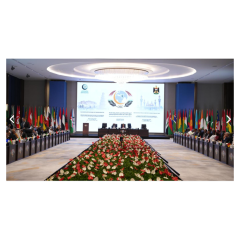
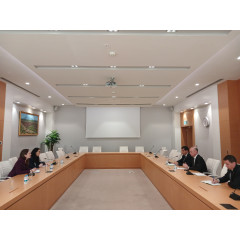
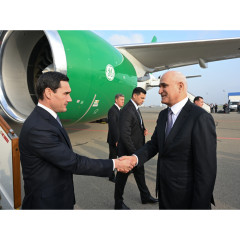
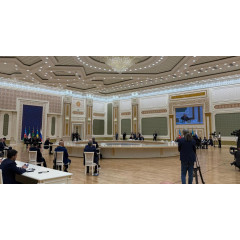
On July 8, 2026, the ninth meeting of the Intergovernmental Turkmen-Azerbaijani Commission on Economic Cooperation was held in Ashgabat. The meeting, organized at the Chamber of Commerce and Industry of Turkmenistan, was attended by members of the Turkmen side of the commission and a delegation led by the Minister of Economy of Azerbaijan, Mikayil Jabbarov.
At the beginning of the meeting, the parties first reviewed the current state and legal framework of bilateral relations. In particular, it was emphasized that the package of documents signed during the state visit of the President of Turkmenistan, Serdar Berdimuhamedov, to Azerbaijan in June this year was a historic step in raising cooperation to new heights.
During the talks, special attention was paid to trade relations, which are consistent in nature. Noting the annual increase in mutual trade turnover, the parties determined specific future plans in the fields of economy, investment, and advanced technologies. In this context, the importance of regularly organizing joint business councils and business forums was highlighted.
Then, the parties reviewed the progress of cooperation in the strategically important oil & gas and power engineering sectors. It was noted that the vast hydrocarbon resources possessed by both countries provide ample opportunities for implementing large-scale infrastructure projects. As an example of the sustainable development of cooperation in the power sector, the project for the construction of a new 1,574 MW power plant in the Turkmenbashi etrap of the Balkan velayat was discussed.
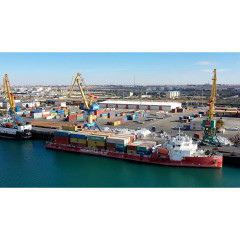
At the end of the meeting, the development of intercontinental transit-transport routes, digitalization, and telecommunications were analyzed. The parties confirmed that the Turkmenbashi International Seaport and the Baku International Sea Trade Port play a key role in coordinating cargo transportation between Asia and Europe, as well as in increasing the logistical potential of the Caspian region.
Following the meeting, relevant decisions were adopted to consistently implement the bilateral agreements.