Official website
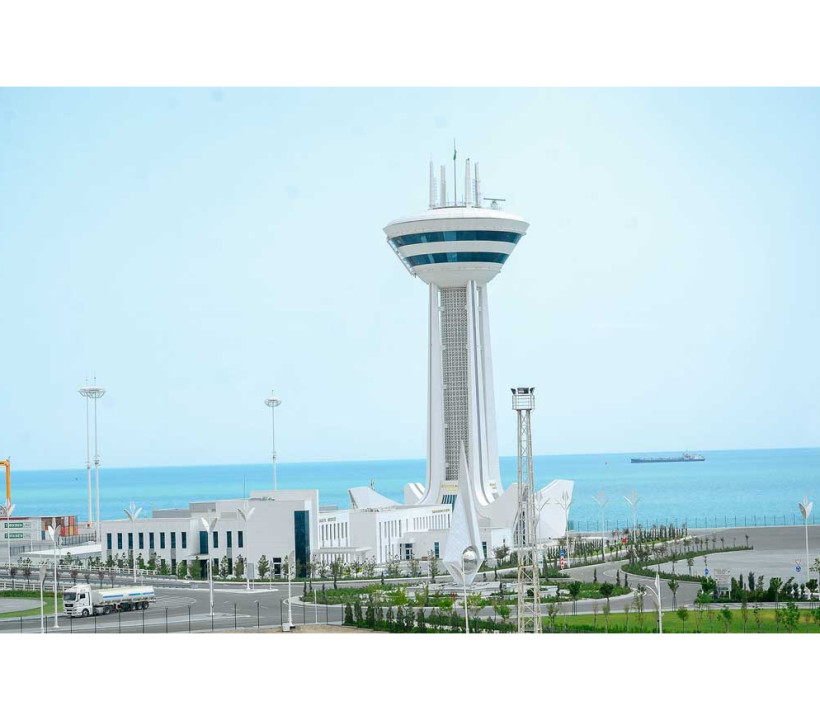
Turkmenistan is firmly establishing its position on the global economic map by creating a strategic system of international transport corridors that meet modern requirements. As a priority of the national transport strategy, the maritime sector has become a true hub for sustainable economic growth, peace, and friendly relations. Strategically located at the crossroads of Asia and Europe, the Turkmenbashy International Seaport has asserted itself as a key logistics hub on a global scale.
The increasing competitiveness of the sector is clearly reflected in the figures: according to the results of 2025, a significant growth rate of 15.2% was achieved in the port's total cargo turnover. The activation of cargo flows along the China–Kyrgyzstan–Uzbekistan–Turkmenistan multimodal corridor and the China–Europe route has proven that our country is the most vital link in the East–West and North–South directions. New agreements with major logistics companies from Georgia, Azerbaijan, and Uzbekistan have further enhanced the international attractiveness of the Trans-Caspian route.
The modernization of the National merchant marine fleet and the steady increase in the technological capacity of the shipbuilding industry allow for a fresh perspective on the sector's future through innovative strategies. The "Balkan" Shipbuilding and Repairing Yard, a center for these large-scale projects, has become a source of national engineering pride. Currently, the construction of two dry cargo vessels and one modern dredger, which will further strengthen the national fleet, is proceeding at a rapid pace.
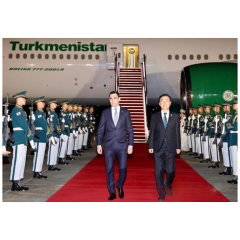
Future plans are even more ambitious: the construction of two Ro-Ro ferries and three additional dry cargo vessels is planned for the near future. The implementation of these projects signifies Turkmenistan's full transition from purchasing foreign vessels to building its own, significantly increasing the national fleet's share in international maritime trade. Furthermore, cooperation with leading companies from the Republic of Korea brings the world’s latest shipbuilding "know-how" to our country, paving the way for enhancing the expertise of local specialists.
The implementation of the "Green Port" strategy, which complies with international environmental standards, along with full digitalization, significantly improves the efficiency of port operations. Thus, the projects aimed at developing the Turkmenbashy International Seaport, the National Merchant Marine fleet, and the "Balkan" Shipbuilding and Repairing Yard will further elevate the importance of Turkmenistan's maritime capabilities in international markets. This is a clear guarantee that Turkmenistan is not just a transport stop in the Caspian region, but the largest strategic hub where high technology and industrial construction converge.